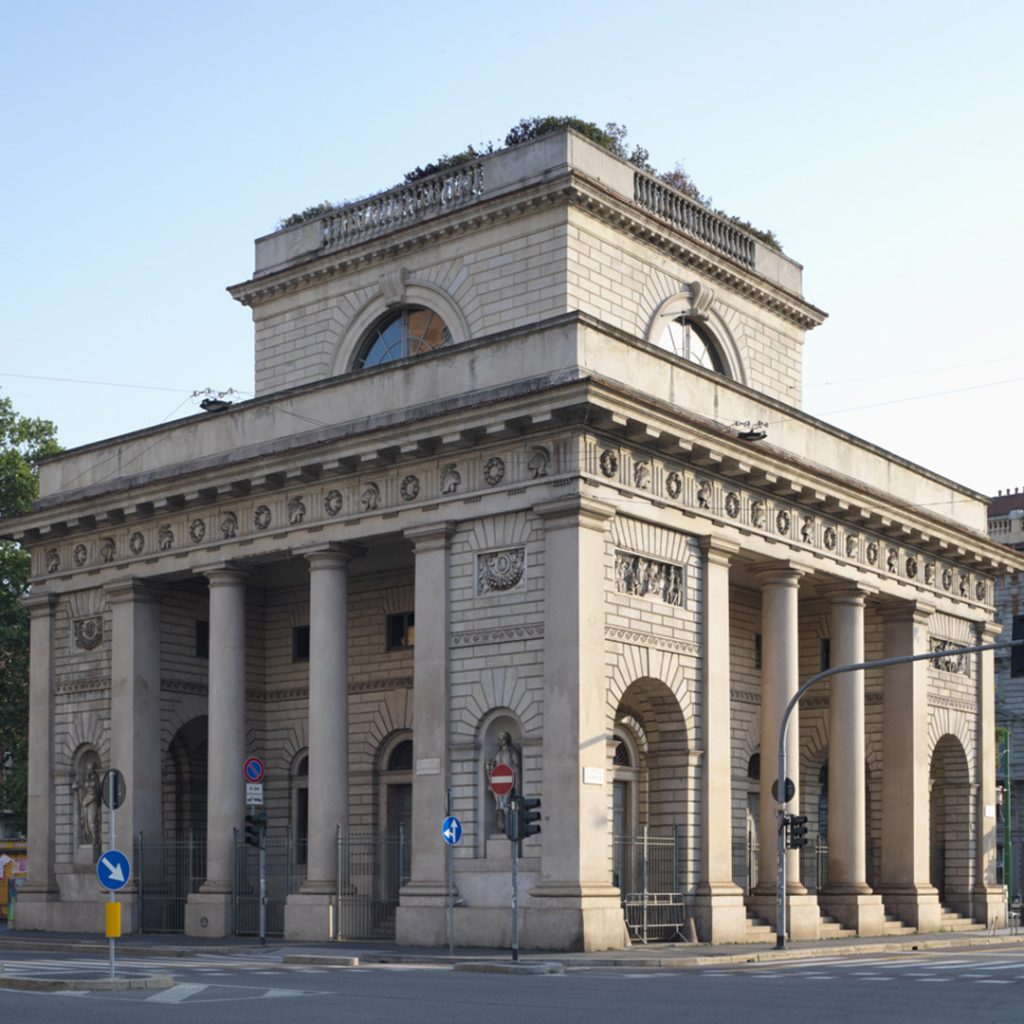
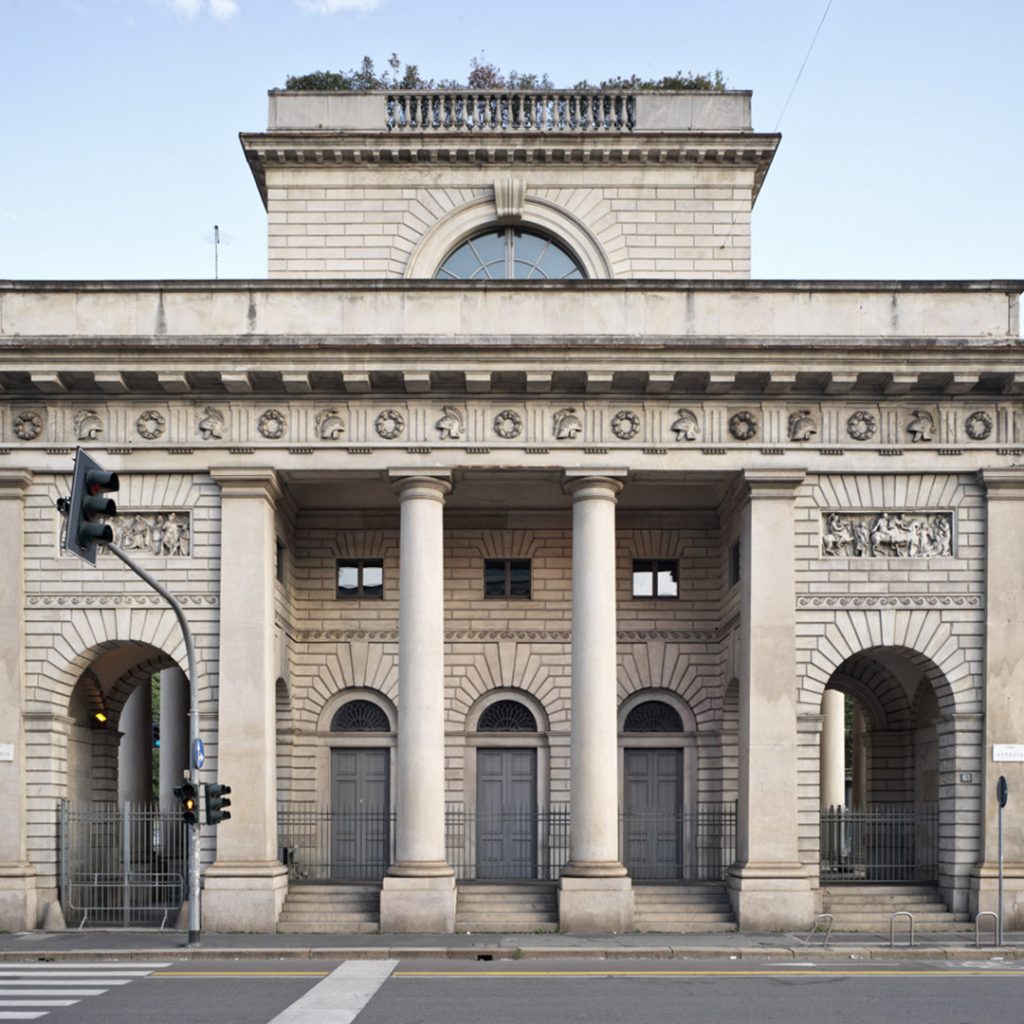
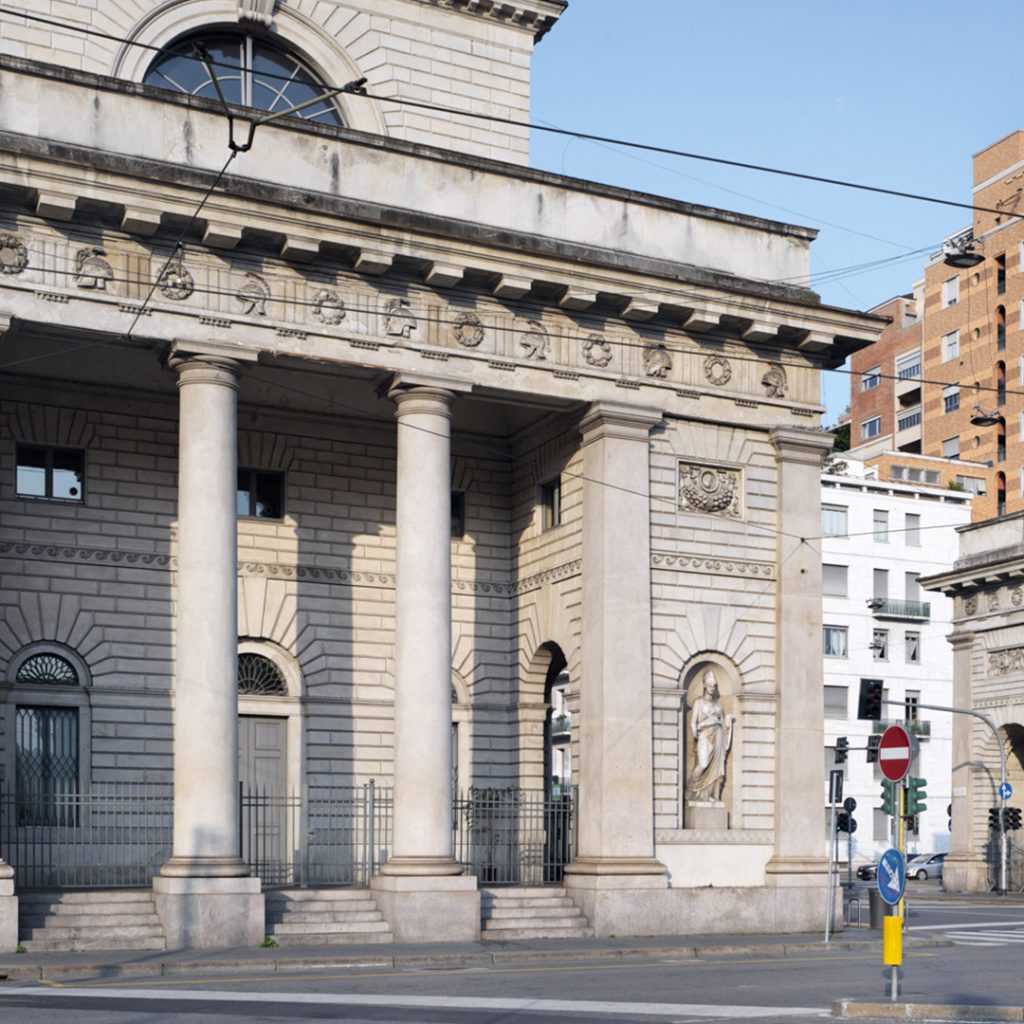
Porta Venezia is one of the eight main gates that opened in the 16th-century circle of Spanish ramparts, redesigned according to a new concept in the Neoclassical era, serving as customs barriers but above all as triumphal entrances to the city. The current toll booths, located between Corso Buenos Aires and Corso Venezia, were built in 1827-28 by R. Vantini to replace others by Piermarini that remained unfinished. Vantini's solution differs from the more common type of neoclassical gate, consisting of a triumphal arch and two symmetrical toll booths, and consists of two parallelepiped buildings on either side of the road, which were once connected by a gate. Open on three sides by Doric tetrastyle porticoes, the buildings are decorated with sculptures by the most famous artists of the time (A. Sangiorgio, P. Marchesi). In the corners of the two façades, towards the city and the countryside, there are niches with Carrara marble statues; on all the façades, at the top and on the corners, there are bas-reliefs depicting scenes from Milanese history.