The foundation of the first basilica, dedicated to Saints Peter and Paul, dates back to the mid-5th century and is attributed to Amanzio, bishop of Como.
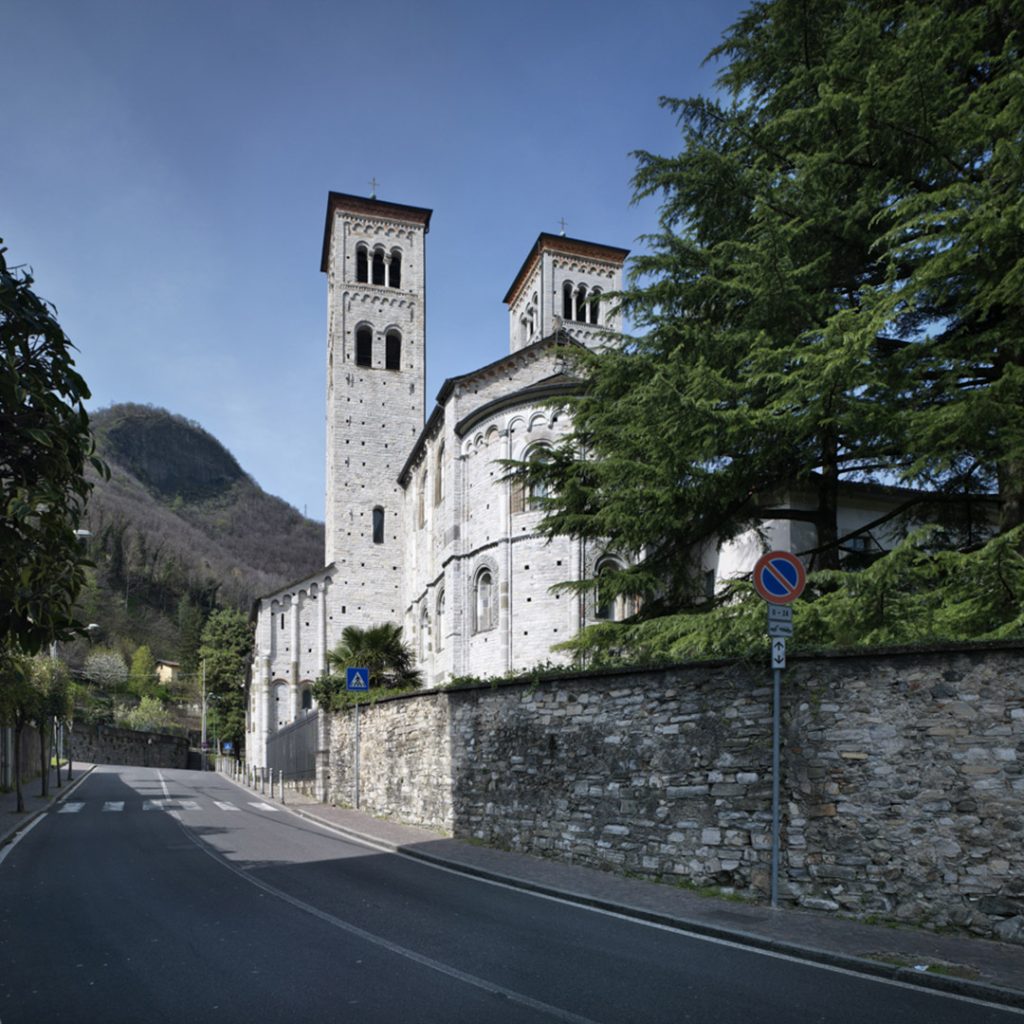
The current dedication to Abundius of Como, who is buried here, dates from 818. In 1007 Bishop Alberico transferred the episcopal seat to Cathedral of Santa Maria Maggiore and, three years later, entrusted the old church to Benedictine monks, who completely rebuilt it during the 11th century in its present forms.
The basilica was solemnly consecrated in 1095 by Pope Urban II.
Over the centuries several restorations were carried out, the most important of which took place in 1586 and 1863. In 1928, interventions mainly of a structural nature brought to light the frescoes in the first bay of the choir and the apse and provided the opportunity to restore all the frescoes of the church.
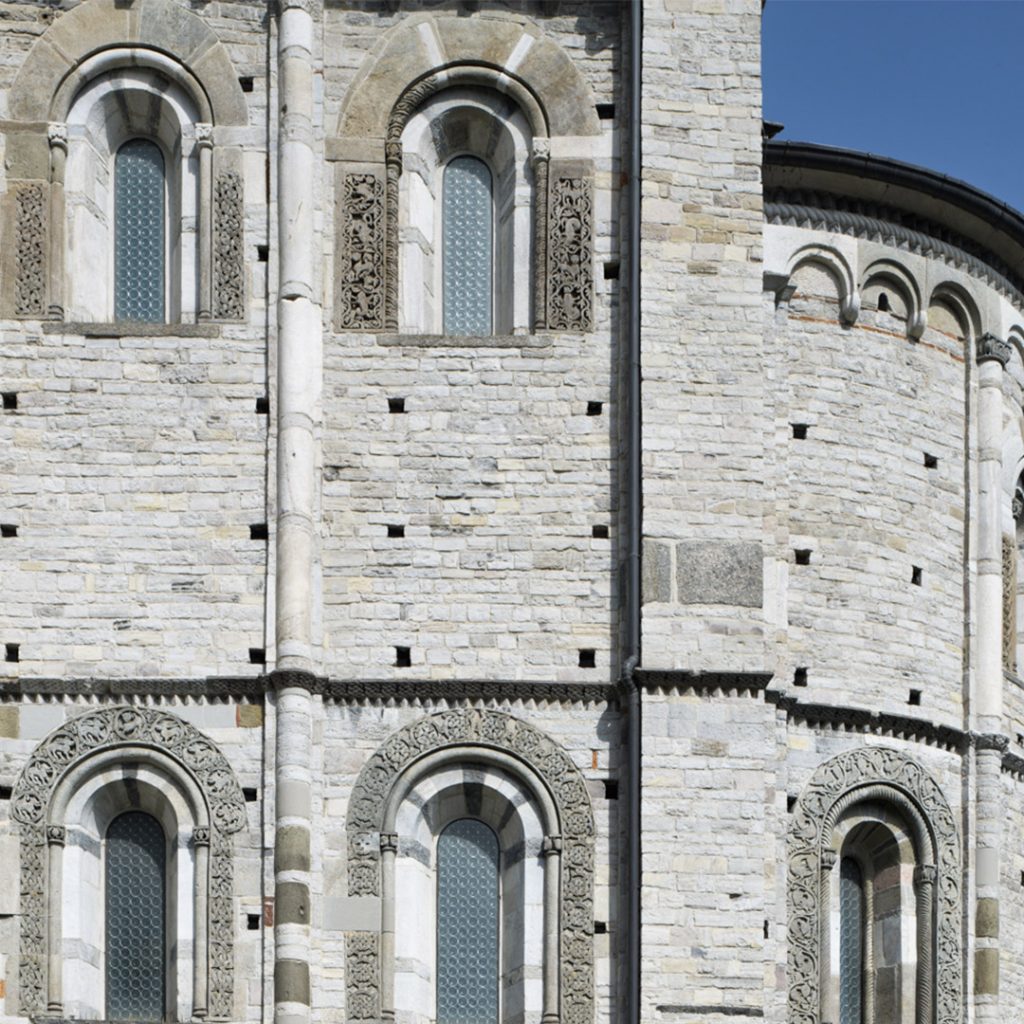
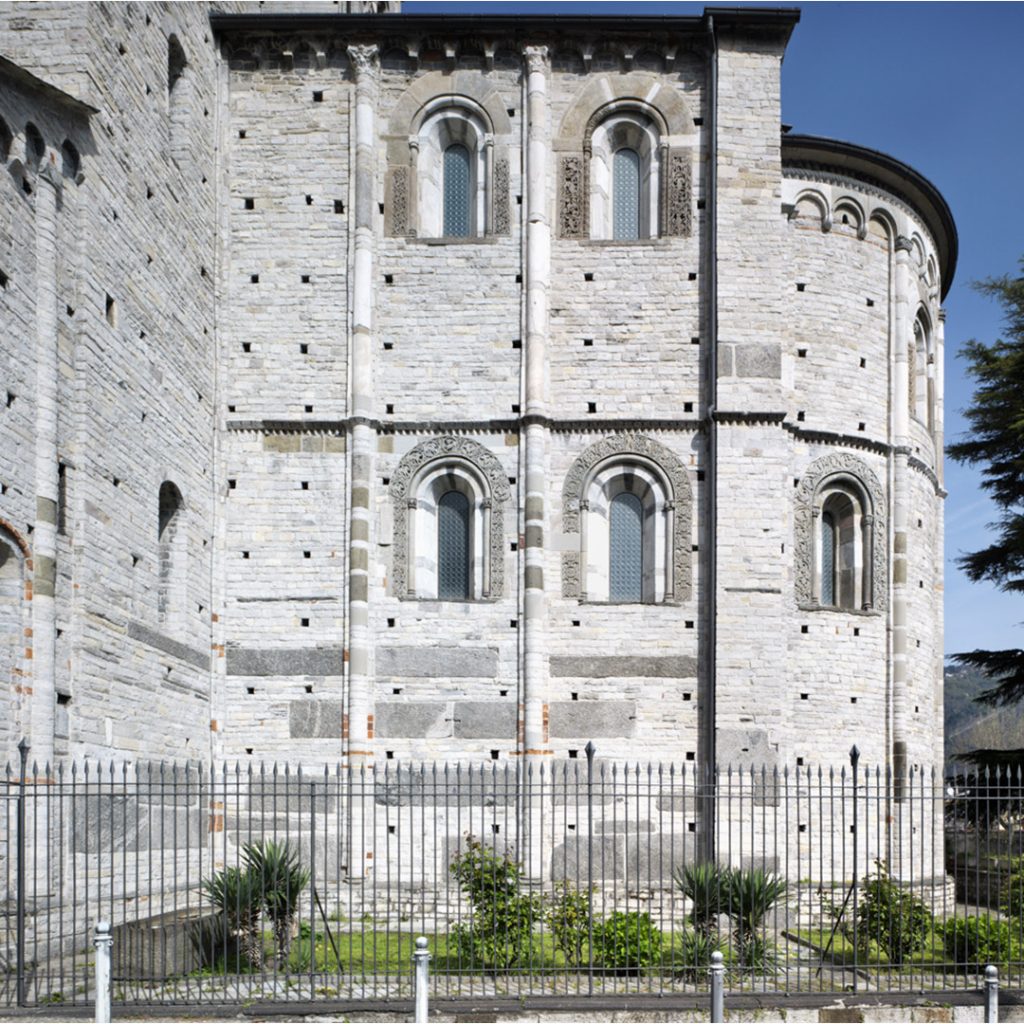
The richness of the façade contrasts with the extreme austerity of the side walls, marked only by three continuous rows of arches. However, it is the eastern part of the building — the choir and apse, together with the eastern side of the presbytery — where the decorative aspect is most refined.
The sculptural decoration is not very abundant, but it is of considerable interest, as it testifies to a particularly fruitful moment rich in new artistic ideas that would later be developed in the mature Romanesque period.