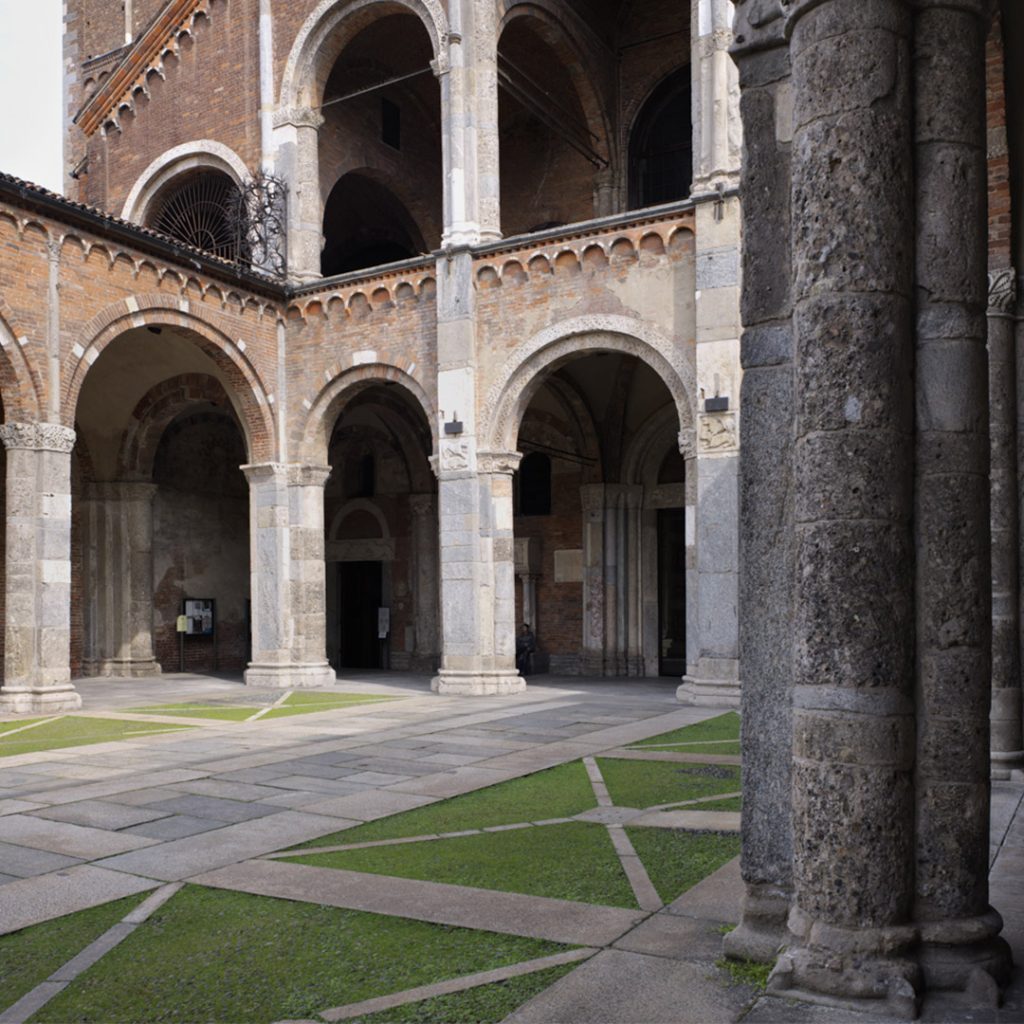
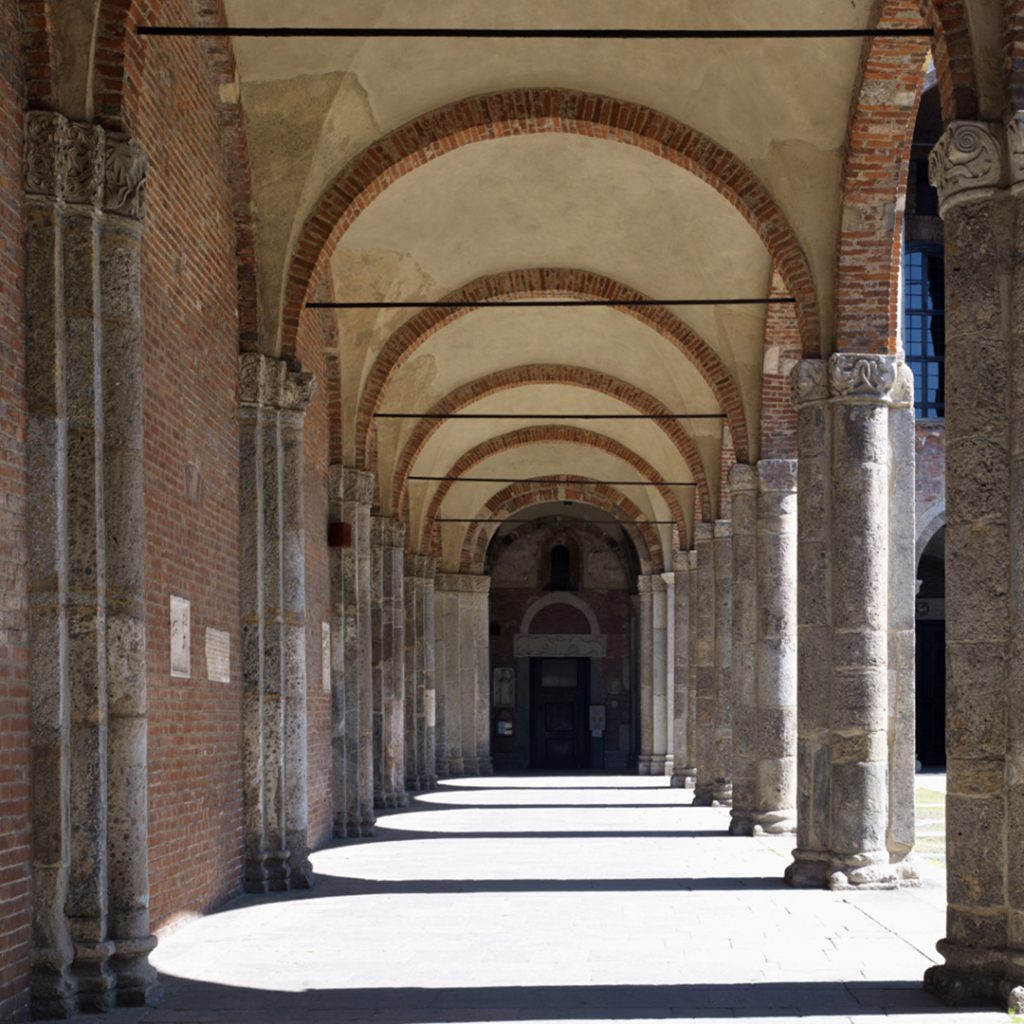
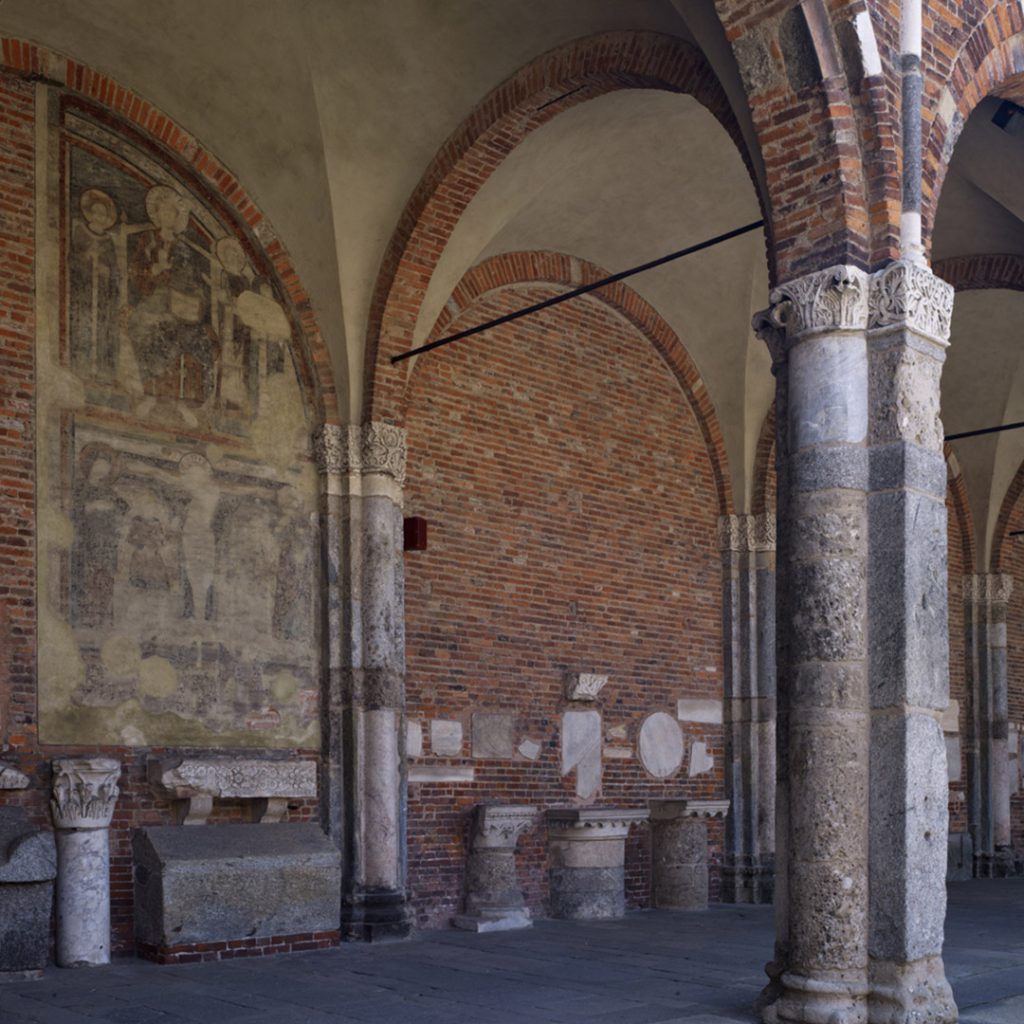
The Basilica of Sant'Ambrogio is perhaps the building that more than any other represents the cornerstone of Milan’s identity and tradition. The continuous modifications carried out over the centuries, often undertaken precisely in the name of preserving that tradition and image, have nevertheless transformed it into an exemplary document in the history of architectural restoration. Despite this, it is still regarded in art history manuals as a prototype of Lombard architecture of the 11th and 12th centuries. The basilica martyrum was founded in 379 on the tombs of Gervasius and Protasius. Ambrose of Milan himself was buried there in 397. At the initiative of the bishops Angilbert II and Anspert, the transformations began that would later shape the medieval basilica between the 9th and the 12th centuries. The restorations carried out between 1857 and 1890 led to the removal of the Baroque additions of the Chapel of the Pilgrims. Further conservation work, carried out by Gasparoli Srl between 1998 and 2000, involved the Atrium of Anspert and the narthex, the Bramante-style portico of the Canonica, and the Oratory of Sigismund of Burgundy.