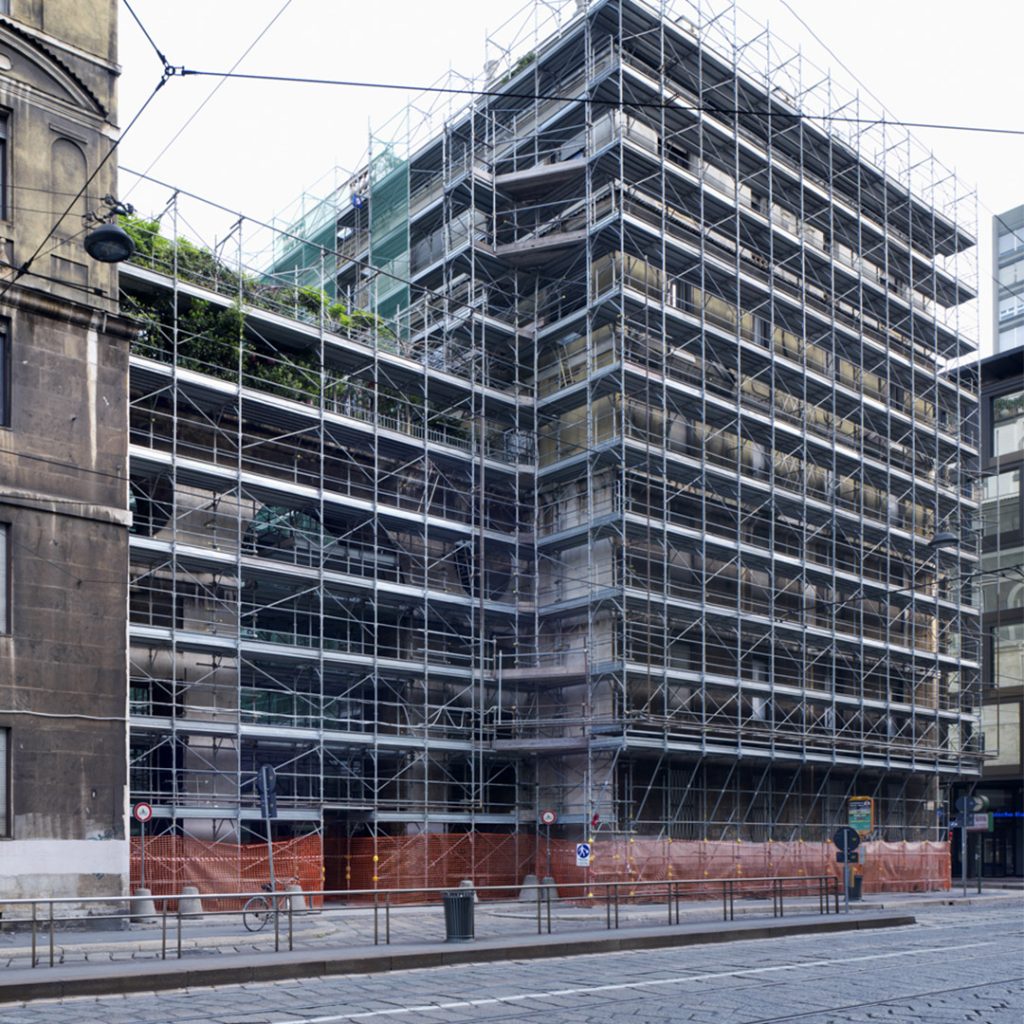
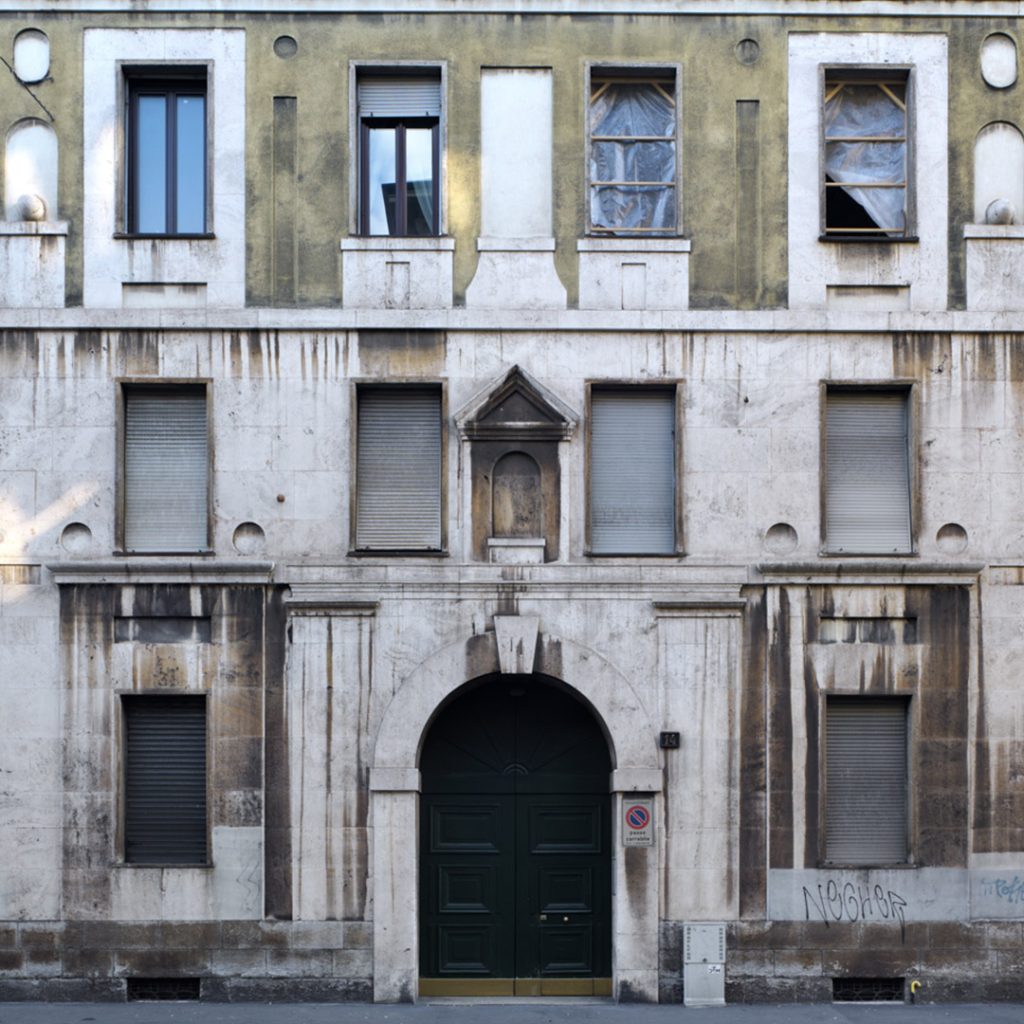
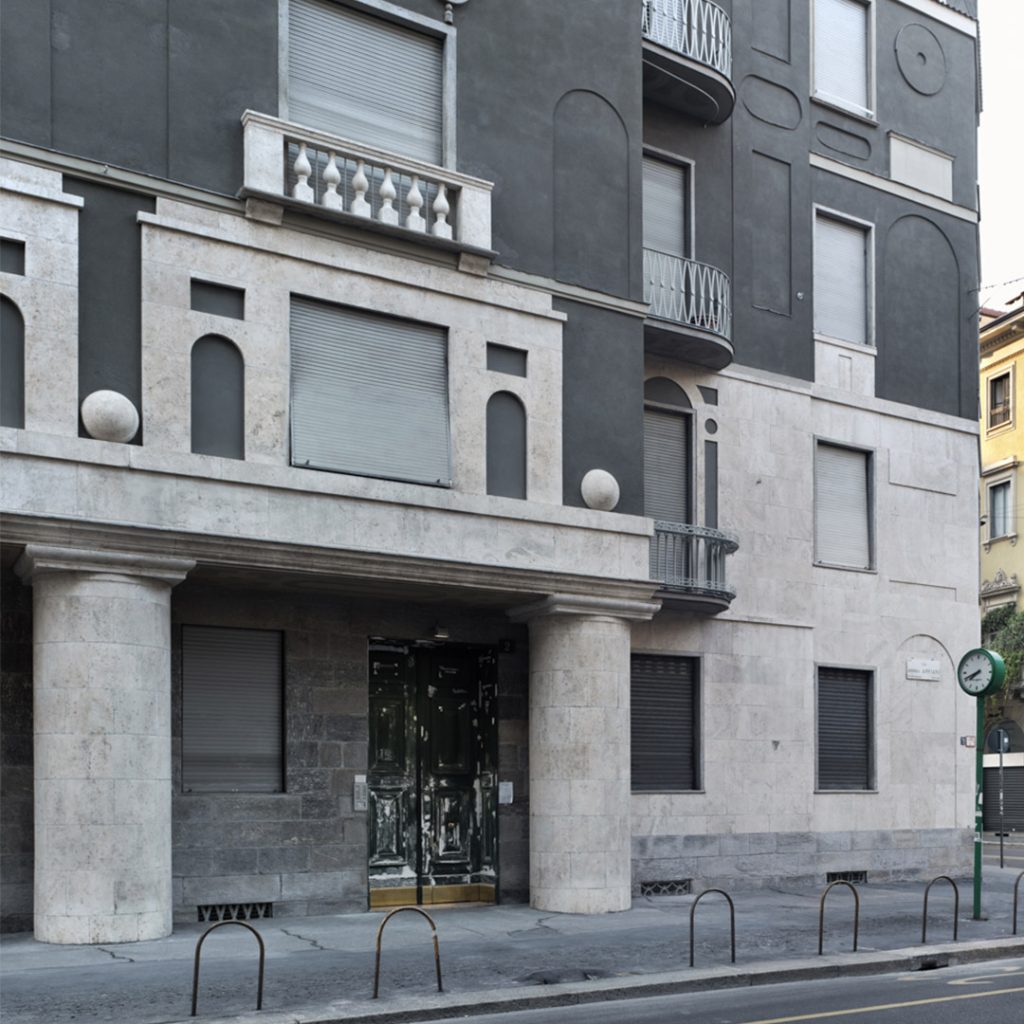
The residential complex located in Via Moscova is the first major architectural work by Giovanni Muzio (1893-1982). The building was completed in 1922 and was heavily criticised by the bourgeoisie and the press. The complex was accused of being “afflicted with Berlin syphilis” and the result of an “architect's crazy and disjointed imagination”. Since then, the building has been known by the dialect expression “Ca” Brütta'. For the Novecentisti, however, Ca' Brütta unquestionably “stirred the waters, opening up new horizons”. The layout of the buildings was revolutionary, as their volumetric distribution was a specific response to both the functional theme and the particular location. Muzio divided the block into two buildings separated by a private road, one in line and one with a courtyard, connected to the main road by the motif of the arch between the two ends, which creates a single architectural entity. The composition of the buildings contributed to the creation of “very favourable air and light conditions for all rooms” – a central theme of Modernism – allowing for the creation of airy spaces on the roofs: long terraces on the top floor attics, the pergola above the connecting arch and the roof gardens, now lost, that crowned the two end buildings.