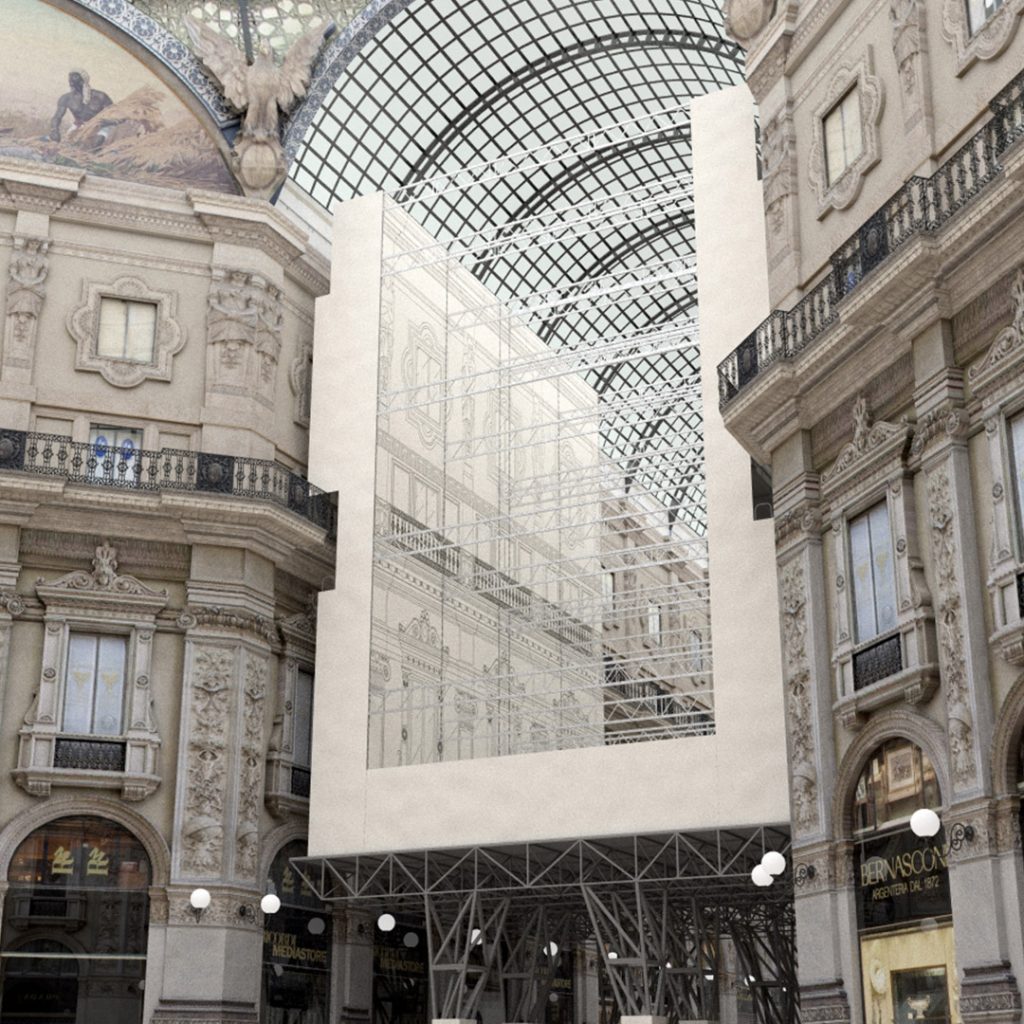
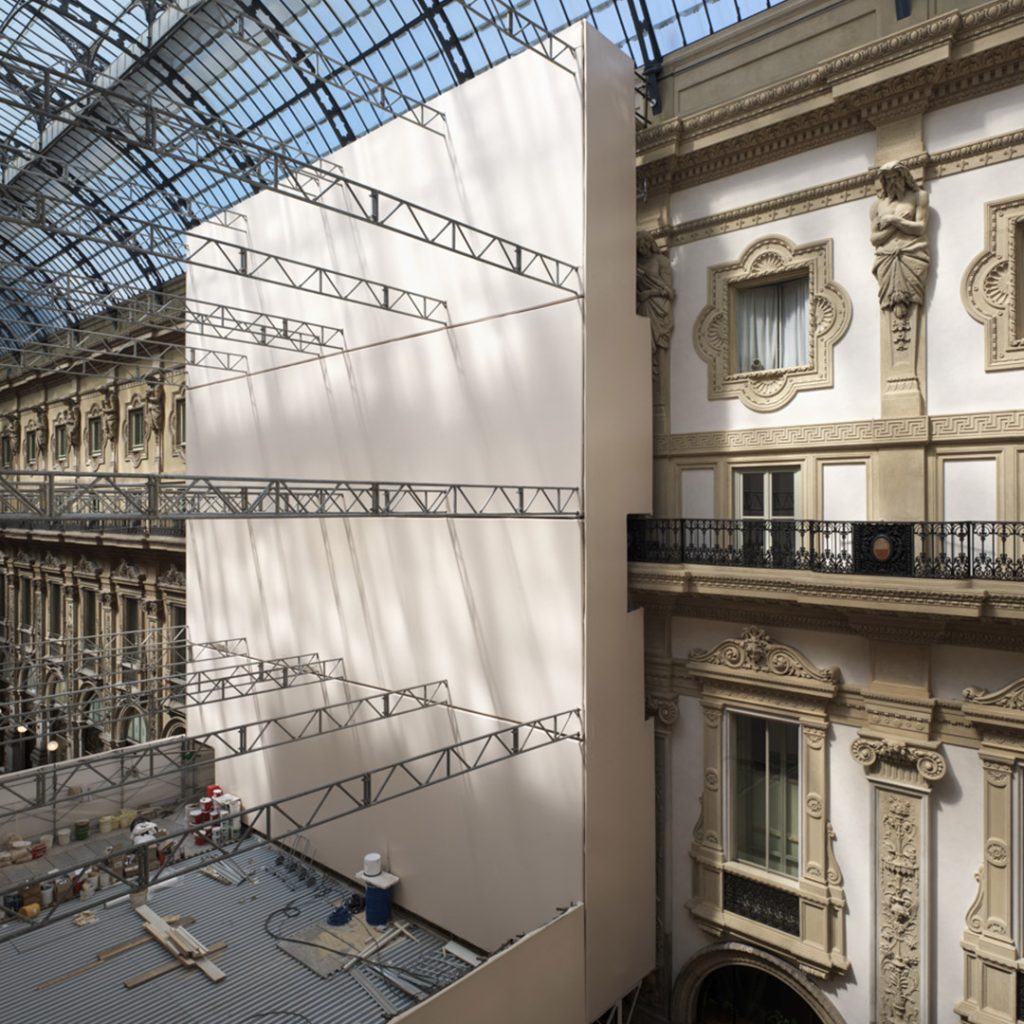
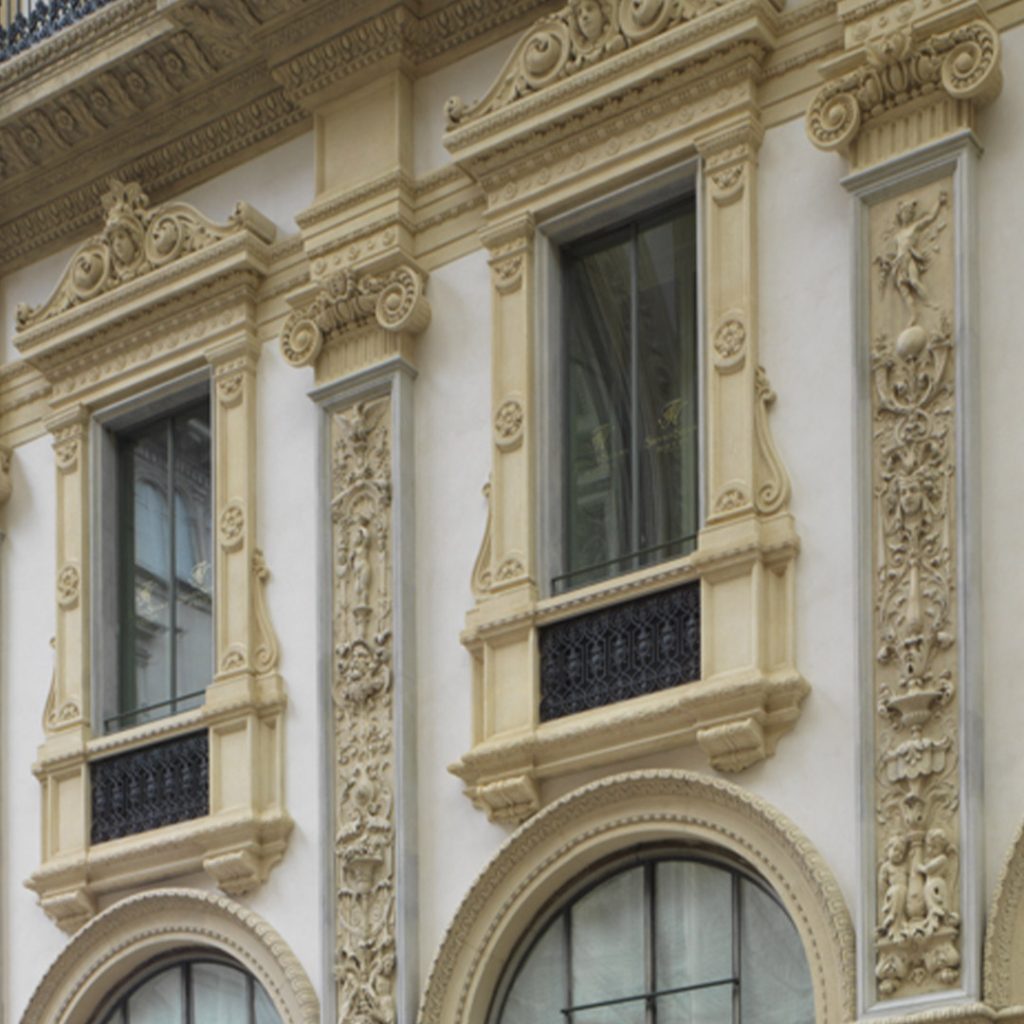
In the first half of the 19th century, Milan looked to major European capitals such as London and Paris as models of urban development. It was in this context that the idea of a covered passage connecting Piazza Duomo to Piazza della Scalawas conceived in 1859, to be dedicated to the king who led Milan into the Kingdom of Italy. The chosen site was to the left of the Duomo, an area occupied by small buildings unsuitable for the image the municipality wanted for the square. In 1860, the municipality held an international competition, which, after several rounds, was won by Giuseppe Mengoni. He proposed a long gallery crossed by a central arm forming a large octagonal hall; the roof was to consist of an iron framework with glass panels. The two main entrances, at the ends of the longest arm, were designed as large triumphal arches. The necessary capital was raised through the formation of a company in England. The façade on Piazza Duomo was completed in 1877. Tragically, on December 30 of that year, Mengoni died after falling from the scaffolding. The gallery, with its cafés, soon became the social hub of Milan. It was partially destroyed during the 1943 bombings. Reconstruction and restoration of the war damage took place between 1949 and 1955. Although the formal and stylistic aspects of Mengoni’s gallery were preserved, its material integrity was systematically and substantially altered.