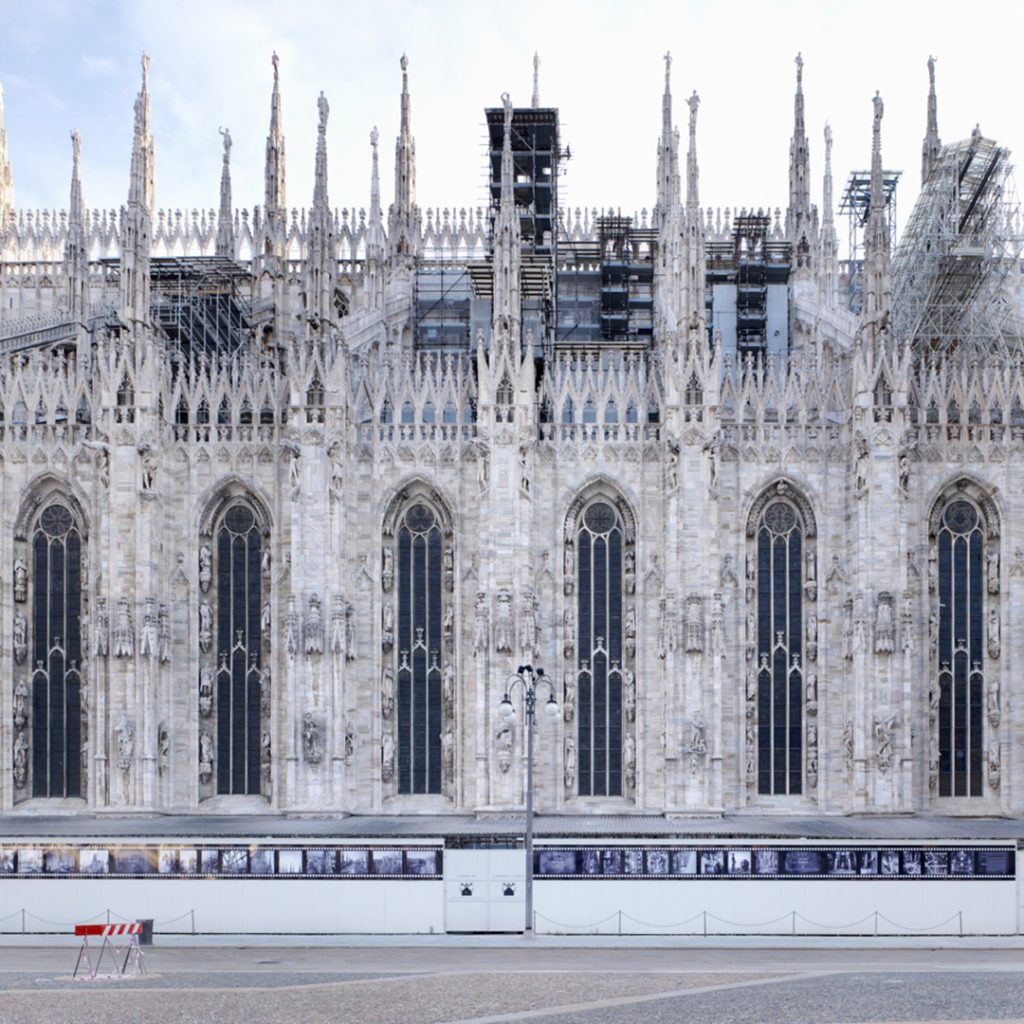
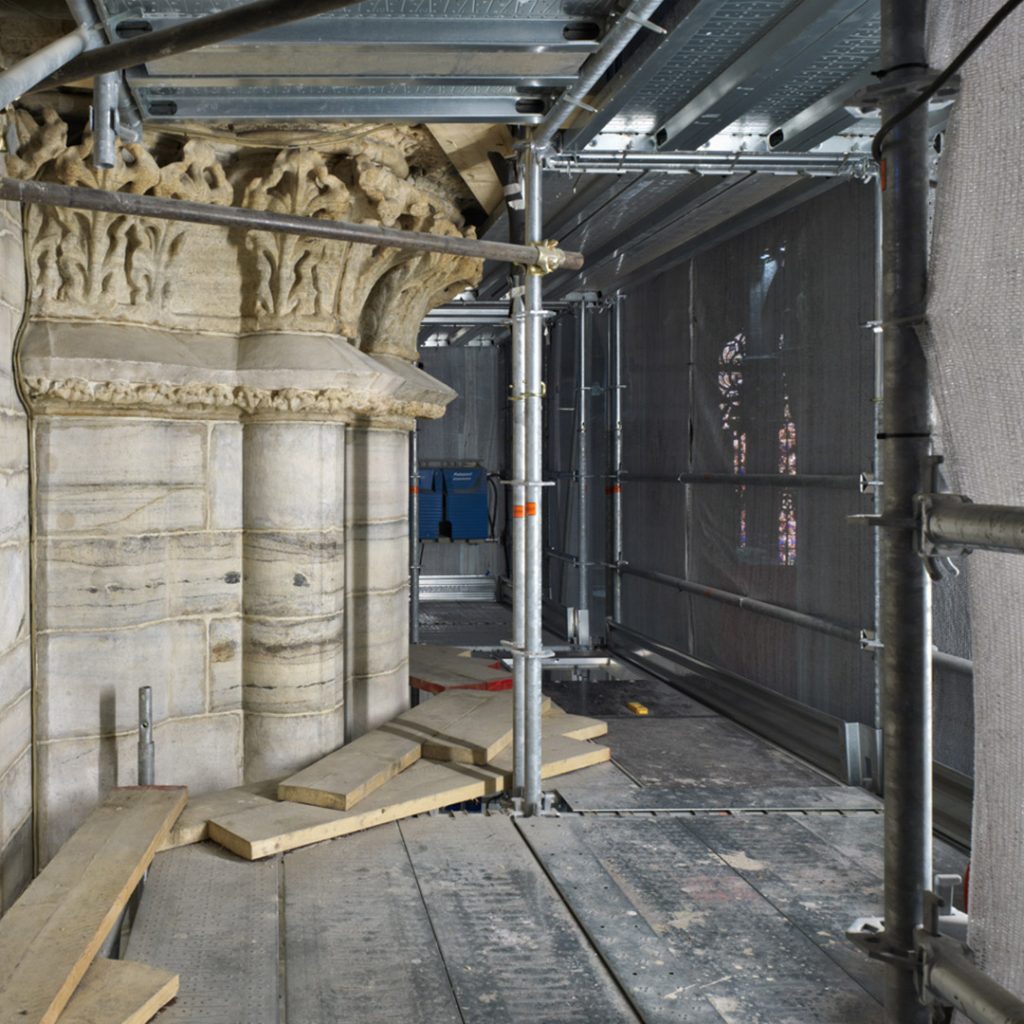
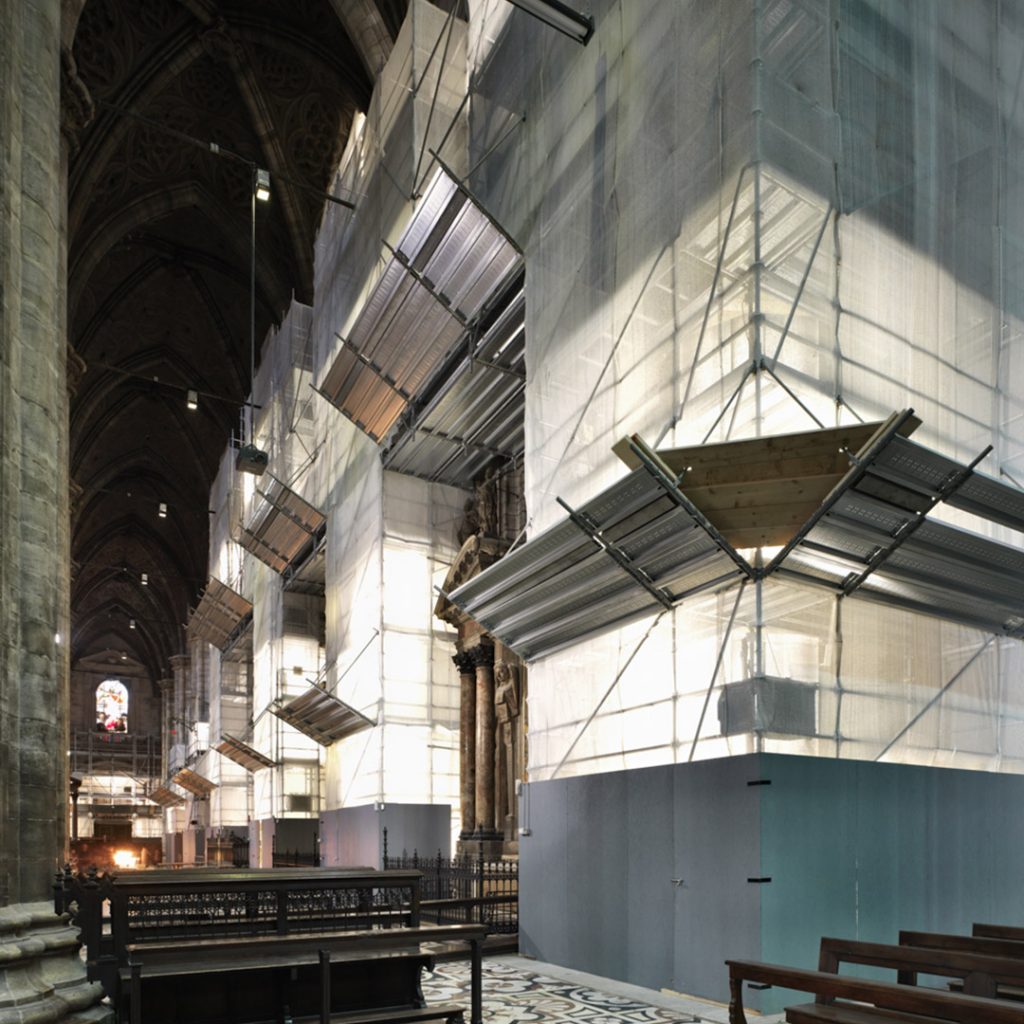
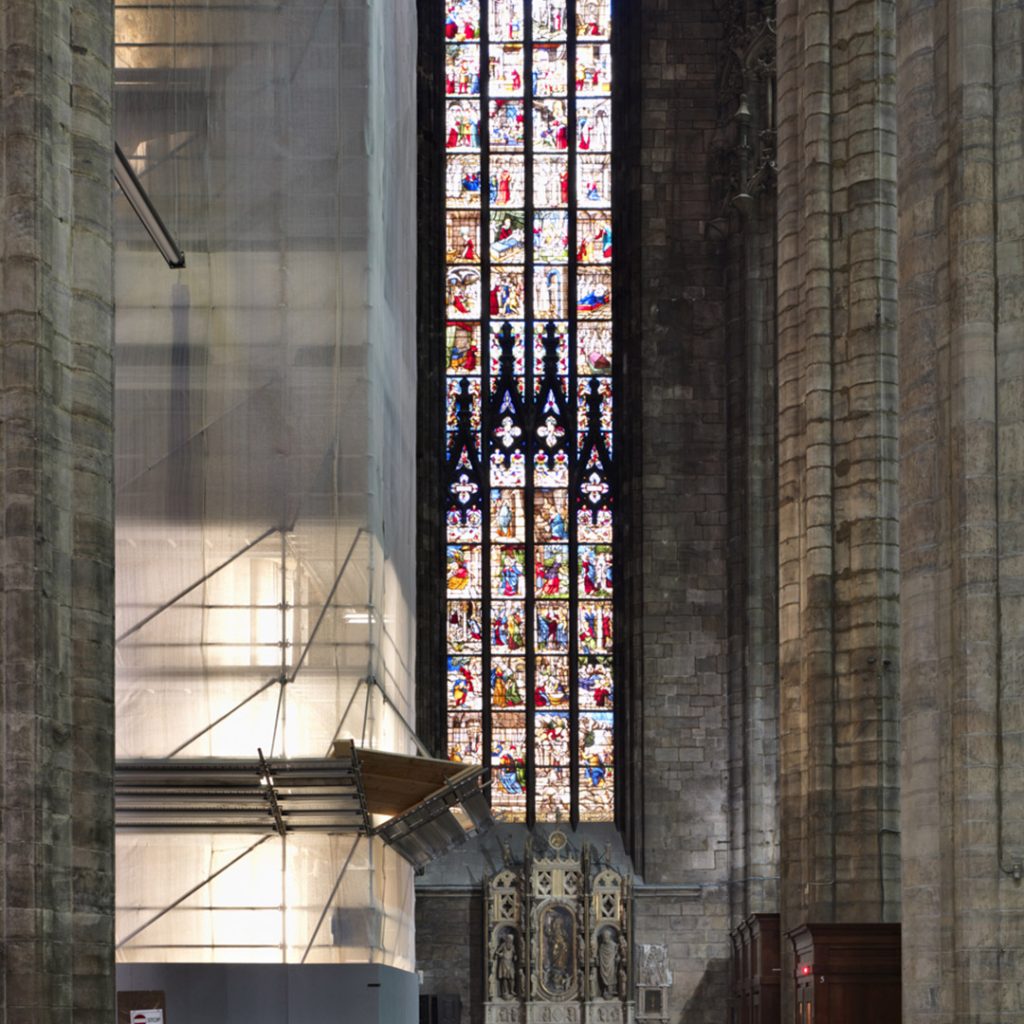
The construction of the Milan Cathedral began in 1386 on the site where the ancient basilicas of Basilica of Santa Teclaand Santa Maria Maggiore once stood. Dedicated to Mary under the title Maria Nascente, the building was commissioned by Gian Galeazzo Visconti and promoted by Archbishop Antonio da Saluzzo. It is the largest and most complex Gothic building in Italy. Built of Candoglia marble, the cathedral is 157 meters long and occupies an area of about 11,700 square meters. The main spire reaches a height of 108.5 meters. Construction continued for nearly five centuries. During this long period, architects, sculptors, artists, and workers—both local and from all over Europe—worked for the Veneranda Fabbrica del Duomo di Milano. The result is a unique architectural synthesis between the transalpine Gothic style and the Lombard tradition. The complexity of the project was such that the last part to be completed was the façade, finished in 1813. The interior has a Latin cross plan with a deep choir and a polygonal apse. The style is mainly late Gothic, with the addition of classical elements introduced during the Counter-Reformation, when the presbytery, the high altar, the pulpits, and some side altars were created. The cathedral is therefore a complex and spectacular architectural organism, shaped by a very long construction history and renowned for its exceptional dimensions and the extraordinary richness of its sculptural decoration.