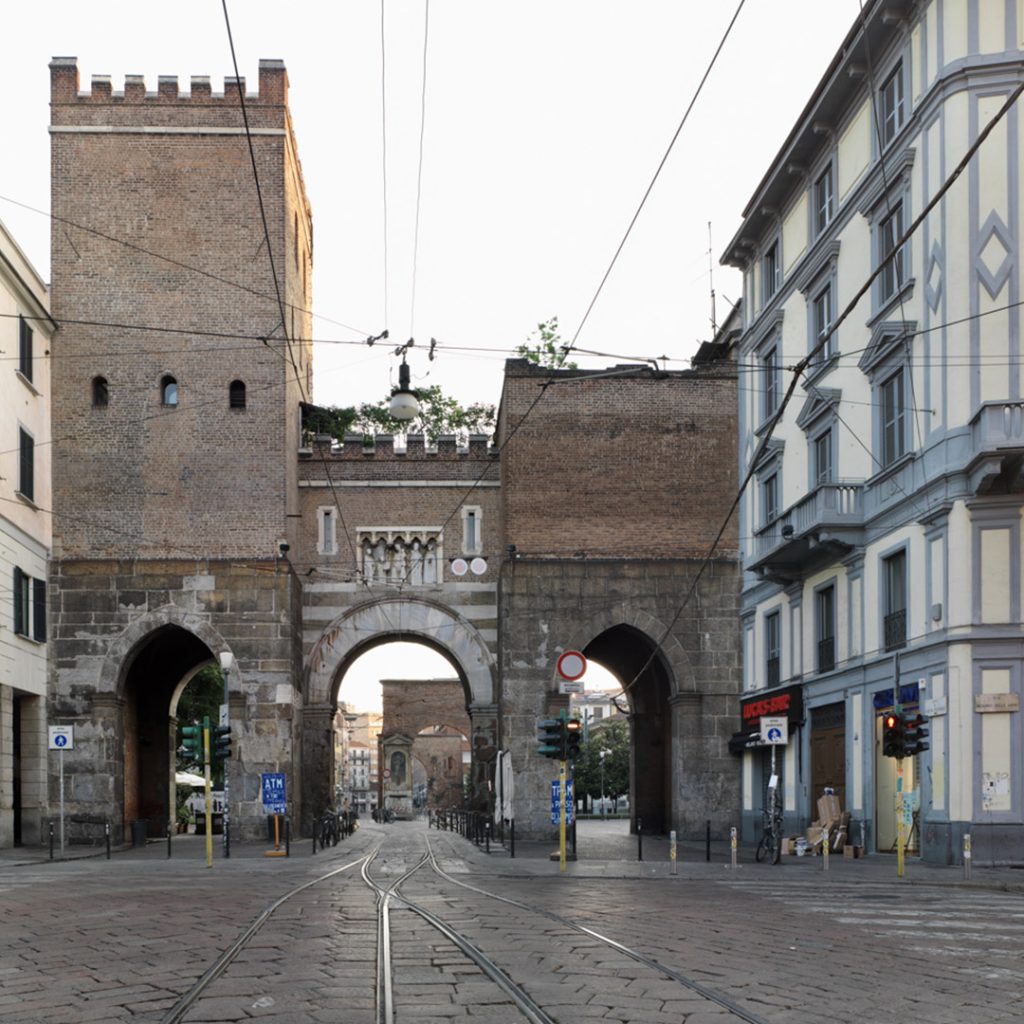
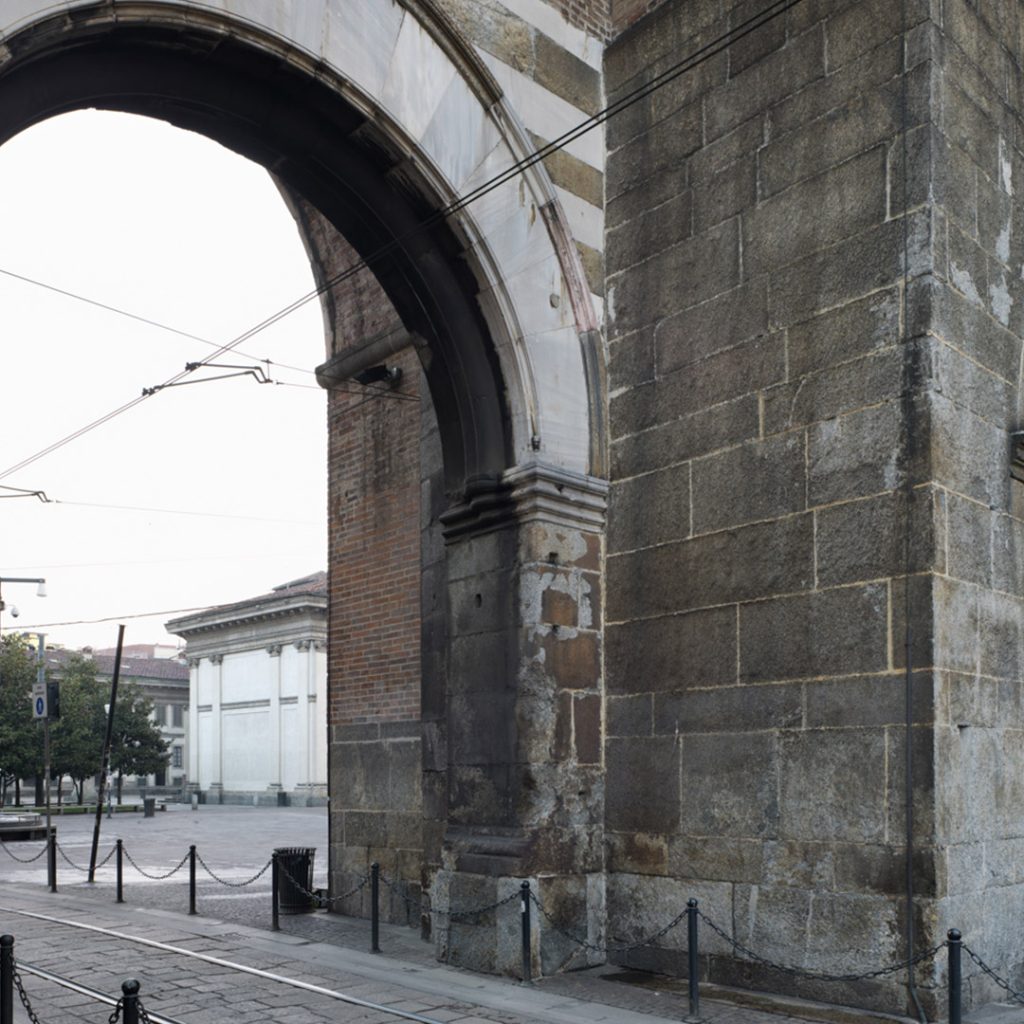
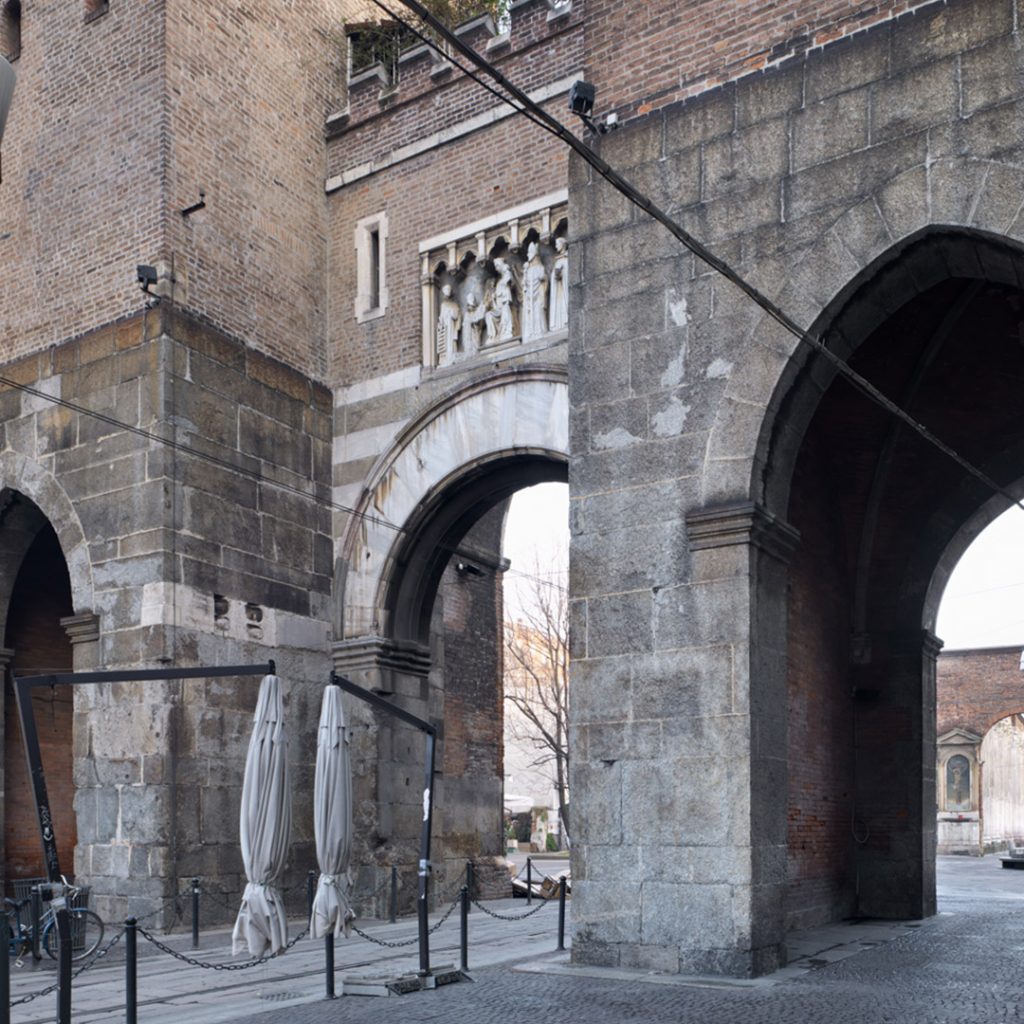
Porta Ticinese represents one of the remains of the Spanish walls surrounding Milan, positioned so as to force the payment of the duty who entered. Named by the Milanese Porta Cicca, it started from the Carrobbio and entered the course of Porta Ticinese, where the Columns and the Basilica of S. Lorenzo were then seen. It immediately assumed an important role both as a historical gate and as a traffic and communication hub, being at the centre of the square that united Corso Ticinese to Corso San Gottardo and the present avenues of the former bastions. The gate was redesigned by Luigi Cagnola in neoclassical style and built between 1802 and 1814. In 1815, at the end of the Napoleonic wars, the Latin inscription “paci populorum shospiae” was placed there. Architecturally, it is a fornix with a triumphal marble arch and has a monumental atrium dedicated to Napoleon I. On either side, two porticoed toll booths were erected, whose walls are covered with rusticated stonework.