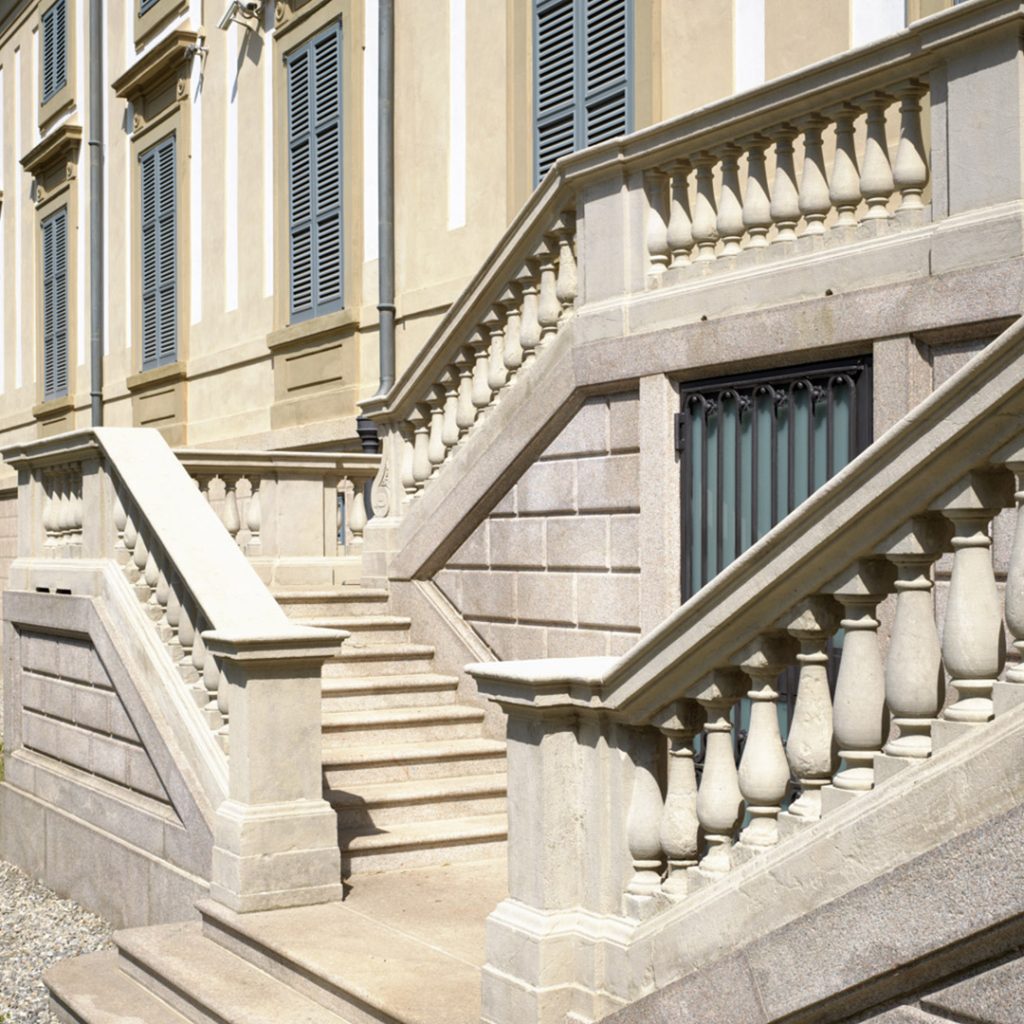
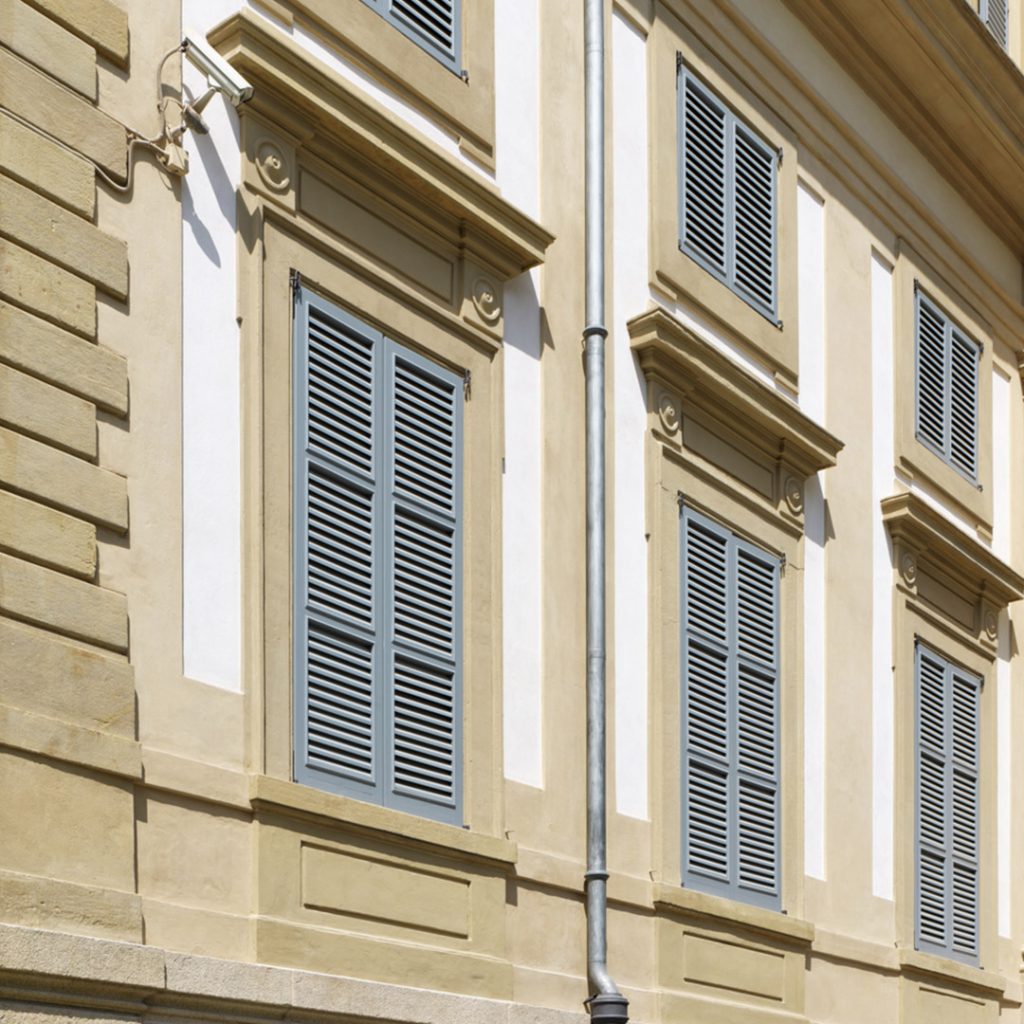
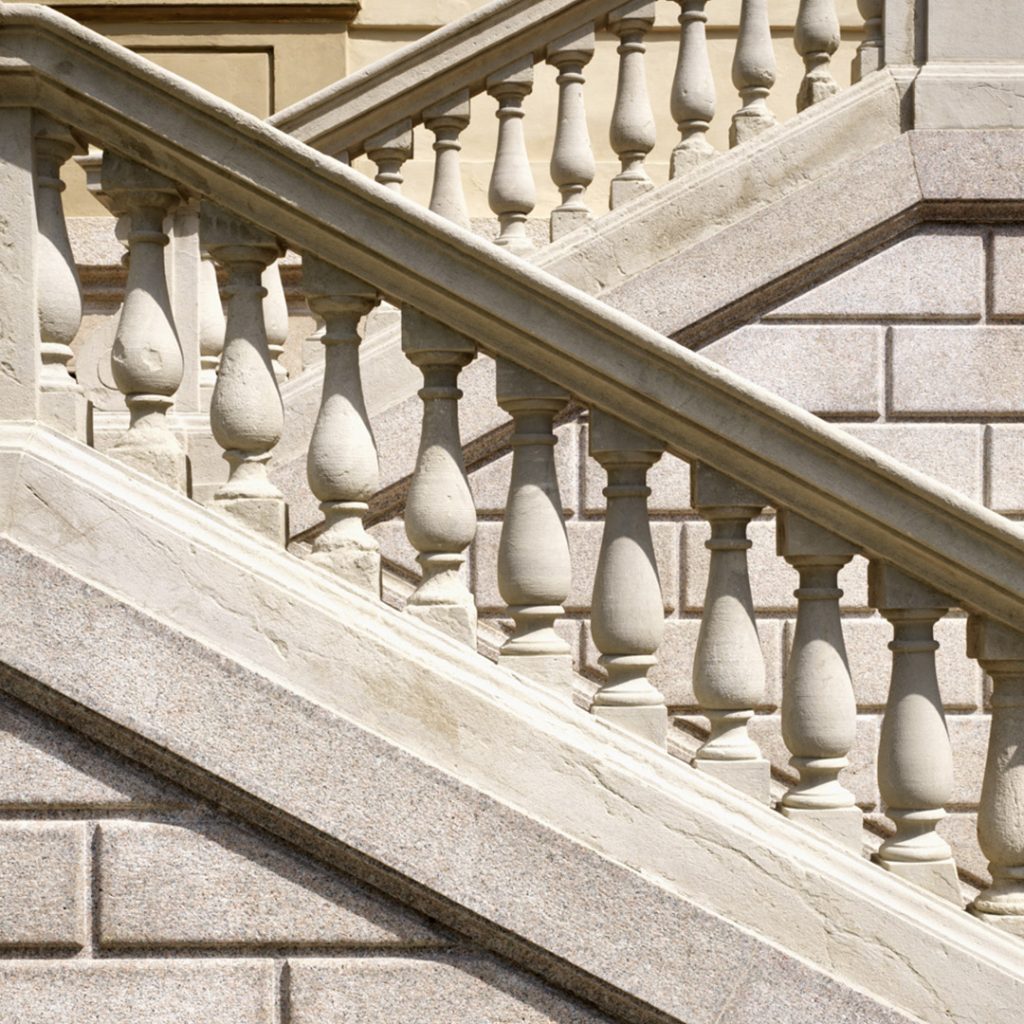
The Royal Villa of Monza was built by Ferdinand of Austria in 1777-80 based on a design by Giuseppe Piermarini. The architect from Foligno tackled the theme of the Monza residence after collaborating with Luigi Vanvitelli on the Royal Palace of Caserta. Although the initial studies envisaged a modestly sized building, the progressive extension of the property allowed him to repeat the model of the prestigious residence on site. The complex layout gives rise to the autonomy of the various façades; of all of them, the one facing the garden is the most significant due to the slight protrusion of the projecting sections and the half-columns. In 1797, under the name of Palazzo Nazionale, it was the residence of the Vice-President of the Cisalpine Republic, then of the Viceroy of Italy, Eugène de Beauharnais, who enlarged it and added the park. Owned by the Savoy family since 1859, the villa underwent considerable alterations in the neo-baroque style of the period, carried out by architects Achille Majnoni, Luigi Tarantola and Villamarina, particularly in the south wing. On 29 July 1900, Umberto I was assassinated in Monza and, following this tragic event, his son and heir to the throne, King Victor Emmanuel III, no longer wanted to use the villa. In 1934, Victor Emmanuel III donated most of the villa to the municipalities of Monza and Milan but retained the south wing, with the rooms of his father's apartment, which remained closed in his memory. With the advent of the Republic, the south wing became the property and administration of the State.